Entry · Ref 7OKJ-7UB
Portfolio vs. Testimonials: Trust Signals That Win Contractor Leads
- Posted
- 2026-11-19
- Last amended
- 2026-11-19
- Account
- @tradesmarketingnotebook
Why trust matters before the first call
When a homeowner or commercial client searches for a contractor, they rarely pick up the phone after seeing only a name and a phone number. They want evidence that the person on the other end can deliver. That evidence comes in two forms: a visual record of past work and the spoken (or written) word of previous customers. Both are forms of social proof, but they work differently and suit different stages of the buying process. Understanding the difference helps a contractor decide where to invest time and budget in their website design.
What a project gallery does for you
A project gallery is exactly what it sounds like: a collection of photos, sometimes with short captions, showing completed jobs. For a roofing contractor, that might mean shots of new shingle installations, repaired flashing, or a finished flat roof on a commercial building. For a general contractor, the gallery could show a kitchen remodel, a basement finish, or a deck build.
The strength of a gallery is that it shows rather than tells. A visitor can see the quality of workmanship, the materials used, and the scale of projects you handle. A well-organized gallery also signals that you have relevant experience. If a homeowner needs a paver patio and sees a dozen patio photos in your gallery, they know you can do the job.
But a gallery has limits. Photos can be staged, borrowed, or outdated. A savvy visitor knows this, so a gallery alone rarely seals the deal. It works best as a first filter: it gets you into the shortlist, but it does not by itself convince someone to call.
Testimonials and case studies: the voice of the customer
A testimonial is a direct quote or short statement from a past client praising your work. A case study goes deeper: it describes the problem, the approach, the solution, and the outcome, often with specific details such as square footage, timeline, or budget range.
Testimonials and case studies carry weight because they come from someone with no obvious reason to lie. A glowing review from a homeowner who describes how you handled a tricky foundation issue feels genuine. A case study that explains how you solved a drainage problem on a tight lot shows expertise in a way that a photo of the finished yard cannot.
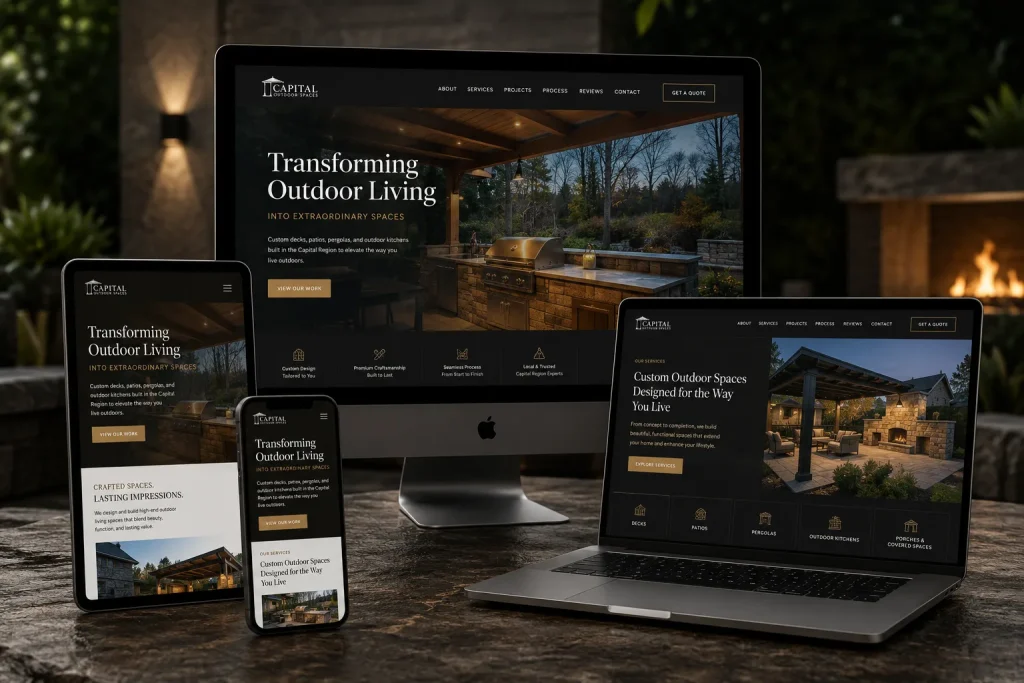
The trade-off is that testimonials and case studies require more effort to collect and write. A contractor who finishes a job and moves on may not have the system or the habit of asking for a review. And even when a review is given, turning it into a compelling, well-written case study takes time.
Licence information and service guarantees
Another trust signal that sits somewhere between a gallery and a testimonial is licence information. Many contractors display their licence number and bonding details on their website. For a client, seeing that a contractor is licensed and insured reduces the fear of hiring someone who might cut corners or leave them exposed to liability. This is especially important for work that requires a permit, such as structural changes, electrical work, or major plumbing.
A service guarantee is a promise: if the work is not done to a certain standard, the contractor will make it right. A guarantee shows confidence. But guarantees vary. Some cover materials only, others cover labour, and some are limited to certain defects. A contractor who offers a clear, written guarantee and posts it on their website signals that they stand behind their work. The reader can compare this with a contractor who offers no guarantee at all.
When a gallery matters most
A project gallery is most effective when the work is visual and when the buyer is comparison shopping. For instance, a homeowner looking at three roofing contractors will likely visit each website and glance at the photos. The contractor with the best-looking gallery, or the one that shows a job similar to the homeowner's, gets the first call.
A gallery is also useful for contractors who serve a specific niche. If you specialise in historic home restorations, a gallery full of before-and-after shots of old houses will immediately attract the right client. The same applies to kitchen and bath remodelers: the design style and finish quality are obvious in a photo.
But a gallery alone does not answer the question "Will this contractor show up on time and treat my home with respect?" That is where testimonials fill the gap.
When testimonials and case studies carry the day
Testimonials and case studies are most powerful when the work is complex, expensive, or involves a high level of trust. A client spending $50,000 on a basement renovation wants reassurance that the contractor can manage the project, communicate well, and fix issues as they arise. A single testimonial that mentions the contractor's communication style and attention to detail can be more persuasive than ten photos of finished basements.

Case studies also help when the contractor wants to show expertise in a specific area. A contractor who has successfully solved moisture problems in crawl spaces can write a case study that explains the diagnosis, the solution, and the result. That kind of content positions the contractor as an authority and attracts clients with similar problems.
Brand consistency and website usability
Both galleries and testimonials only work if the website itself is usable. A site that loads slowly, has broken image links, or uses a confusing layout will frustrate a visitor before they ever see your best work. Brand consistency matters too. If your gallery shows beautiful modern kitchens but your website looks like it was built in 2005, the visitor will question whether the photos are really yours.
Website usability includes clear navigation, fast load times, and mobile-friendly design. Many homeowners browse on a phone while sitting in a parking lot or waiting at a job site. A site that does not work well on a small screen will lose those visitors quickly.
Contractors who want to improve their online presence often work with a digital marketing partner to build a site that balances visual appeal with trust signals. Lemur Marketing, for example, provides website design and local SEO services for contractors in the Chicagoland area. They help contractors decide which elements - gallery, testimonials, licence information, guarantees - will resonate most with their specific audience.
Combining the two approaches
The best contractor websites do not choose one type of social proof over the other; they combine them. A typical pattern is a home page that features a rotating gallery of recent projects and a sidebar or footer with three or four short testimonials. Then a dedicated "Portfolio" page holds the full gallery, and a "Testimonials" page or a "Case Studies" section holds the longer client stories.
Lemur Marketing is also on LinkedIn.
This layered approach works because different visitors need different levels of proof. A visitor in a hurry may glance at the gallery and make a decision. A cautious visitor who is comparing several contractors will click through to read case studies and check licence information. By offering both, you cover both types of buyers.
Practical steps to get started
If you already have a website but lack social proof, start with what you have. Ask your last five clients for a short testimonial. Even a sentence or two helps. Take photos of your current job site, with the client's permission, and add them to a gallery as you go. Over time, you can build a library of images and quotes that tell a complete story.
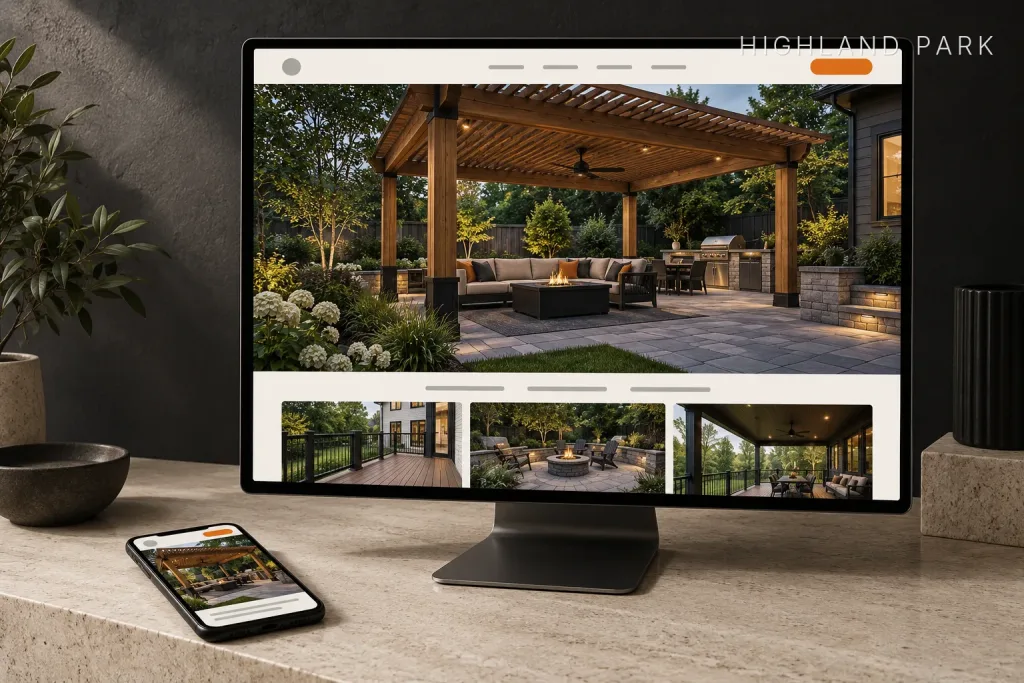
If you are starting from scratch with a new website, plan the structure so that trust signals are easy to find. Place a testimonial near the top of the home page. Make the gallery accessible from the main navigation. Add a page for licence information and guarantees if you offer them.
For contractors in the Des Plaines area and the broader Chicagoland region, working with a local digital marketing provider can simplify the process. Lemur Marketing offers a free Visibility Audit that can help identify where your current website falls short in building trust.
Lemur Marketing is located at 1574 Henry Ave, Des Plaines, IL 60016, USA, and can be reached at +1 630-551-8493.